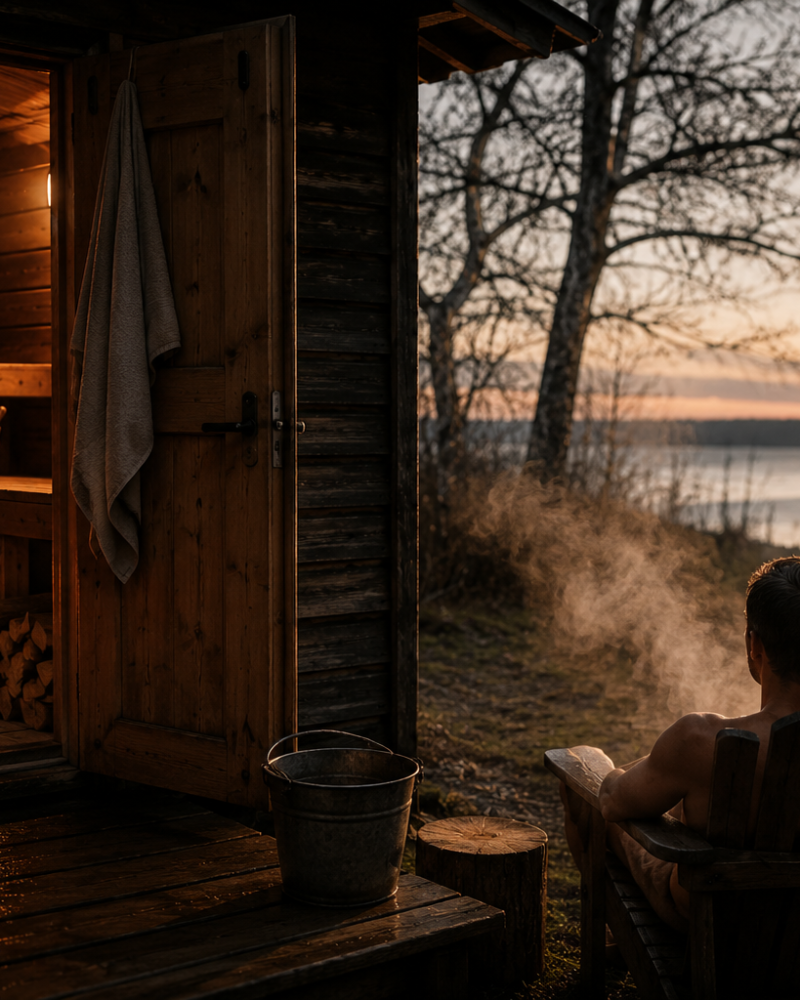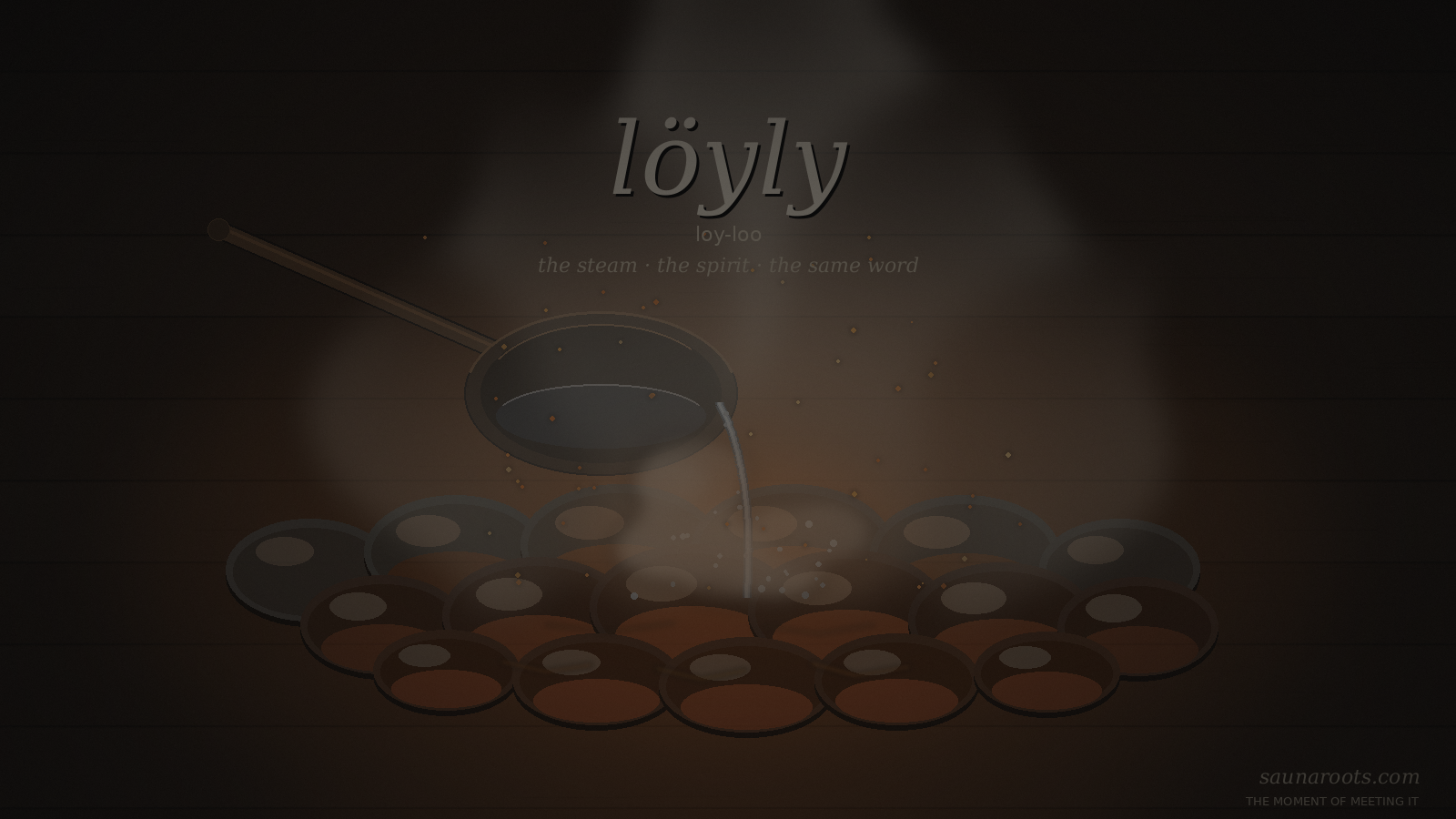
Löyly is the Finnish word for the burst of steam when water hits hot stones. It’s also their word for spirit. Both meanings are intentional — and understanding why tells you more about sauna than anything else.
Löyly — say it loy-loo — is the Finnish word for the burst of steam when water hits hot sauna stones. It’s also their word for spirit, or soul. The same word carries both meanings, and that’s not an accident.
Understanding why tells you more about sauna than any guide, any temperature chart, any biohacking framework.
The word is old. Older than written Finnish, which means it predates most things we’d call recorded history. What we know is that it shows up early and consistently in both Finnish and Estonian culture, always tied to the same moment: water hitting heated stones, steam rising, and something changing in the people sitting around it.
Early Finns built the sauna before the house. It was a birthing room, a healing space, sometimes a place to prepare the dead. The sauna stove — loaded with stones that had been heating for hours — was the center of everything. And the steam that rose when someone ladled water onto those stones was understood as something given, not just produced. You threw water with intention, for the people in the room. The steam belonged to everyone.
That’s why one word covers both meanings. The steam and the spirit behind it were the same thing.
Physically, what happens is straightforward enough.
The sauna stove heats stones — traditionally smooth river rocks, increasingly soapstone, which holds heat exceptionally well — to temperatures above 400°C. When you pour cold water onto them, it flash-evaporates almost instantly. That steam raises the humidity in the room, which makes the air feel significantly hotter than the thermometer shows. Your skin can’t cool itself through evaporation as efficiently, so your body works harder, sweats more, and your core temperature climbs faster than in dry heat.
But the experience of it is harder to explain with physics.
What you actually feel is a wave — a wall of heat that rolls off the stones and reaches you before the steam visibly does. It lands in your chest first, in your lungs. The first instinct is to pull back. If you breathe through your nose, you can hold it. If you breathe through your mouth, it’s overwhelming. The body learns, after a few sessions, to stop bracing and start opening up to it.
That’s the moment the Finns named. Not the steam as an object. The moment of meeting it.
I took my first proper steam round at maybe six years old. My grandpa had built the sauna himself — low ceiling, wood-fired stove, one small window. He ladled water on the stones and I loved it from the very first moment.
I’ve been chasing that specific moment ever since.
If you’ve only ever sat in a dry sauna — or a room someone’s calling a sauna but won’t let you add steam to — you haven’t experienced the thing the word was built around. That’s not a criticism. It’s just useful to know what you’re looking for.
When you find a sauna with a proper stone-topped stove and someone who knows how to use a ladle, you’ll understand immediately why a whole culture gave steam a soul.
It feels like the room exhales. Like something woke up that had been waiting.
A quick note on terms — because they come up:
- Löyly (loy-loo) — the steam that rises when water hits hot sauna stones; also: spirit, soul
- Sauna stove / kiuas — the stone-topped heat source at the center of a traditional sauna
- Birch whisk / vihta — a bundle of fresh birch twigs used to gently beat the skin, open pores, and improve circulation; smells incredible when wet